
Paper 04 · White paper · Male pelvic health

Lymphatic Stagnation as a Unifying Mechanism in Male Pelvic Floor Dysfunction

A pelvic lymphatic model connecting erectile dysfunction, prostatitis, and lower urinary tract symptoms.

Abstract

This white paper advances the hypothesis that age- and lifestyle-associated lymphatic stagnation within the pelvic basin is an upstream contributor to erectile dysfunction, prostatitis-like syndromes, and lower urinary tract symptoms. It presents a cranio-caudal congestion model in which declining lymphatic contractility, interstitial stagnation, vascular dysfunction, and tissue remodeling reinforce one another across the male pelvic floor.
Key findings

01

The model treats pelvic floor dysfunction as a coupled lymphatic-vascular problem rather than a collection of isolated symptom categories.

02

It links impaired drainage across inguinal, iliac, and obturator nodal stations to neurovascular compromise and progressive tissue remodeling.

03

It suggests that non-pharmacologic assessment and drainage-oriented intervention deserve systematic investigation alongside conventional urologic pathways.

Platform architecture and treatment stack

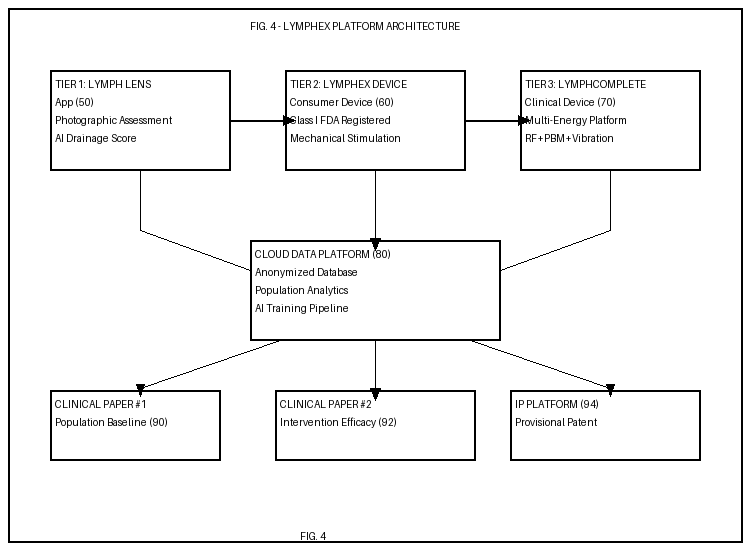
Platform ecosystem figure

Platform architecture and treatment stack

Cross-platform systems figure used here to show how imaging, consumer-guided therapy, and regulated device pathways may support future pelvic-health translation.

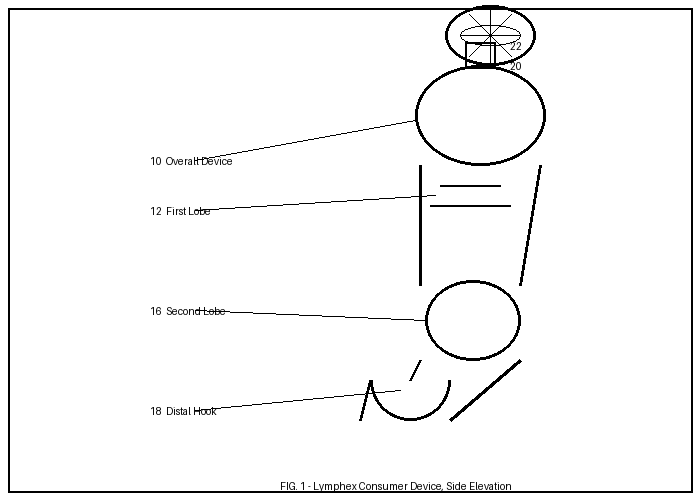
LymphRelief side elevation

Consumer-form illustration

LymphRelief side elevation

Side-elevation configuration shown as a visual translational reference for controlled tissue contact and directional handling.

Related papers

Continue across the Lymphex research program.

Return to hub
Paper 01White paper · Hypothesis article

Mechanical Lymphatic Transport and Peripheral Neuropathy: The Helical Limb Model

A mechanobiological hypothesis linking rotational limb loading, fascial dynamics, distal lymphatic transport, and neuropathic vulnerability.

Peripheral neuropathy
Lymphatic transport
Biomechanics

This paper proposes the Helical Limb Model, a systems-level hypothesis that repetitive rotational loading in paired-bone limb segments can alter fascial tension, interstitial pressure dynamics, and distal lymphatic transport. Rather than displacing established neuropathy etiologies, it frames impaired drainage and pressure-sensitive tissue mechanics as a potential cofactor in selected idiopathic or multifactorial neuropathic presentations.

Paper 02White paper · Hemodynamic model

Vascular Stiffness and Neurolymphatic Failure: A Hemodynamic Model of Neurodegeneration

A clearance-centered model of brain aging that connects arterial stiffness, glymphatic exchange, and meningeal lymphatic drainage.

Neurodegeneration
Hemodynamics
Brain clearance

This paper argues that age-related vascular stiffening may impair the pulsatile mechanical forces that support periarterial cerebrospinal fluid exchange, glymphatic clearance, and downstream meningeal lymphatic drainage. Within this framework, amyloid accumulation is treated not solely as an initiating lesion, but as a downstream manifestation and amplifier of broader clearance failure in the aging brain.